
UNDER THE TAMARIND TREE
WHY THE SUDDEN
INTEREST IN THE
TAMARIND TREE?
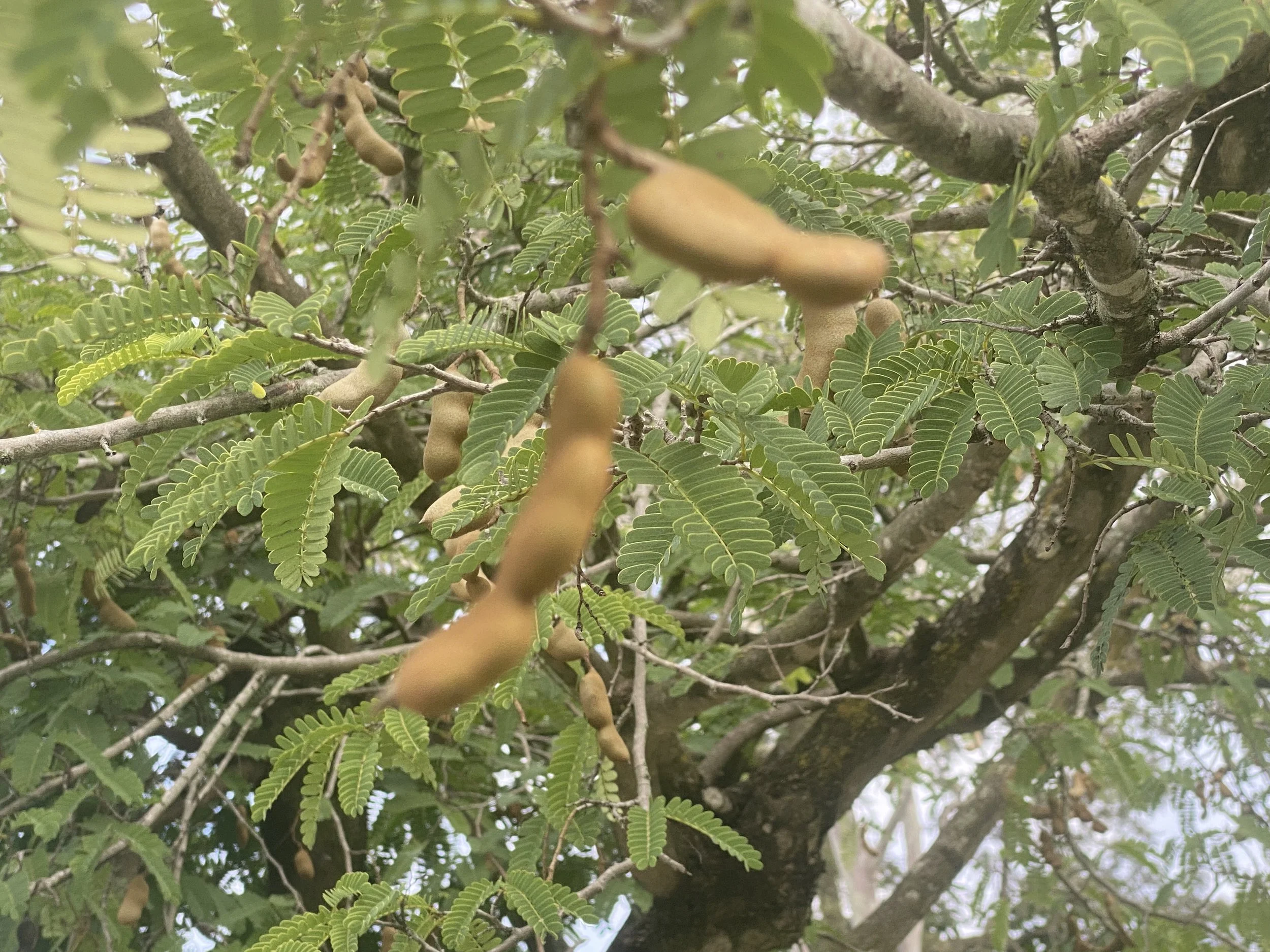
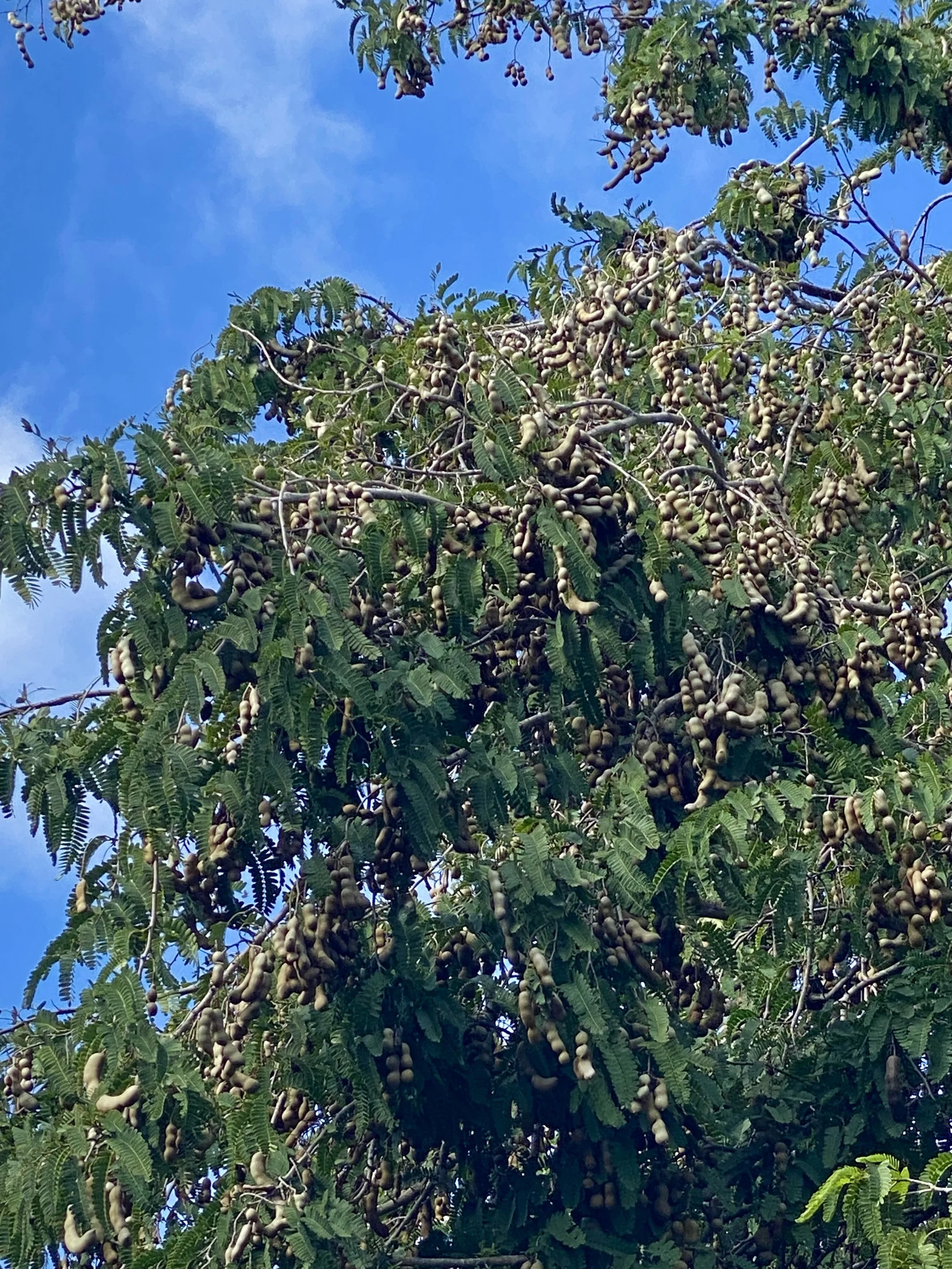
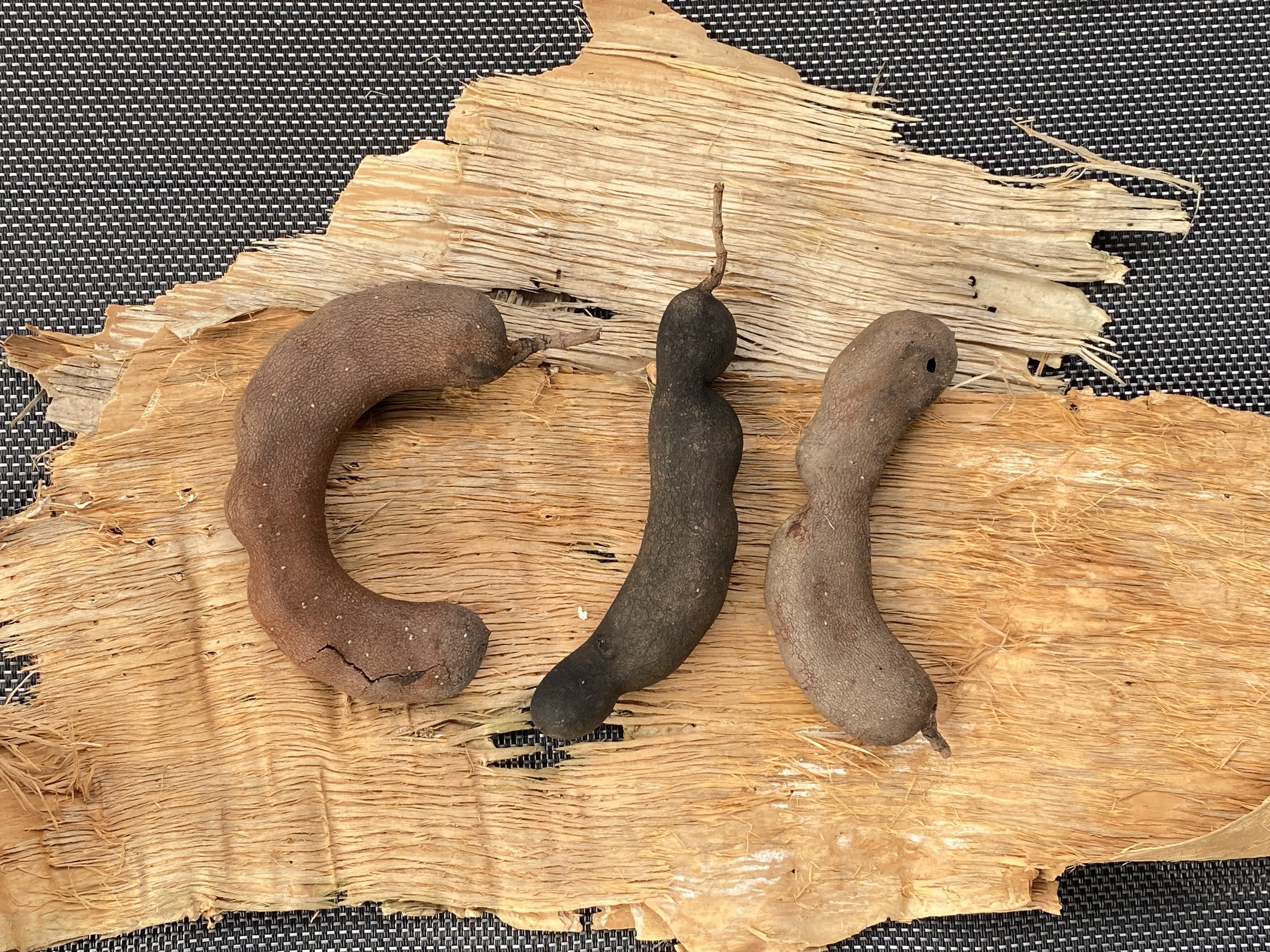
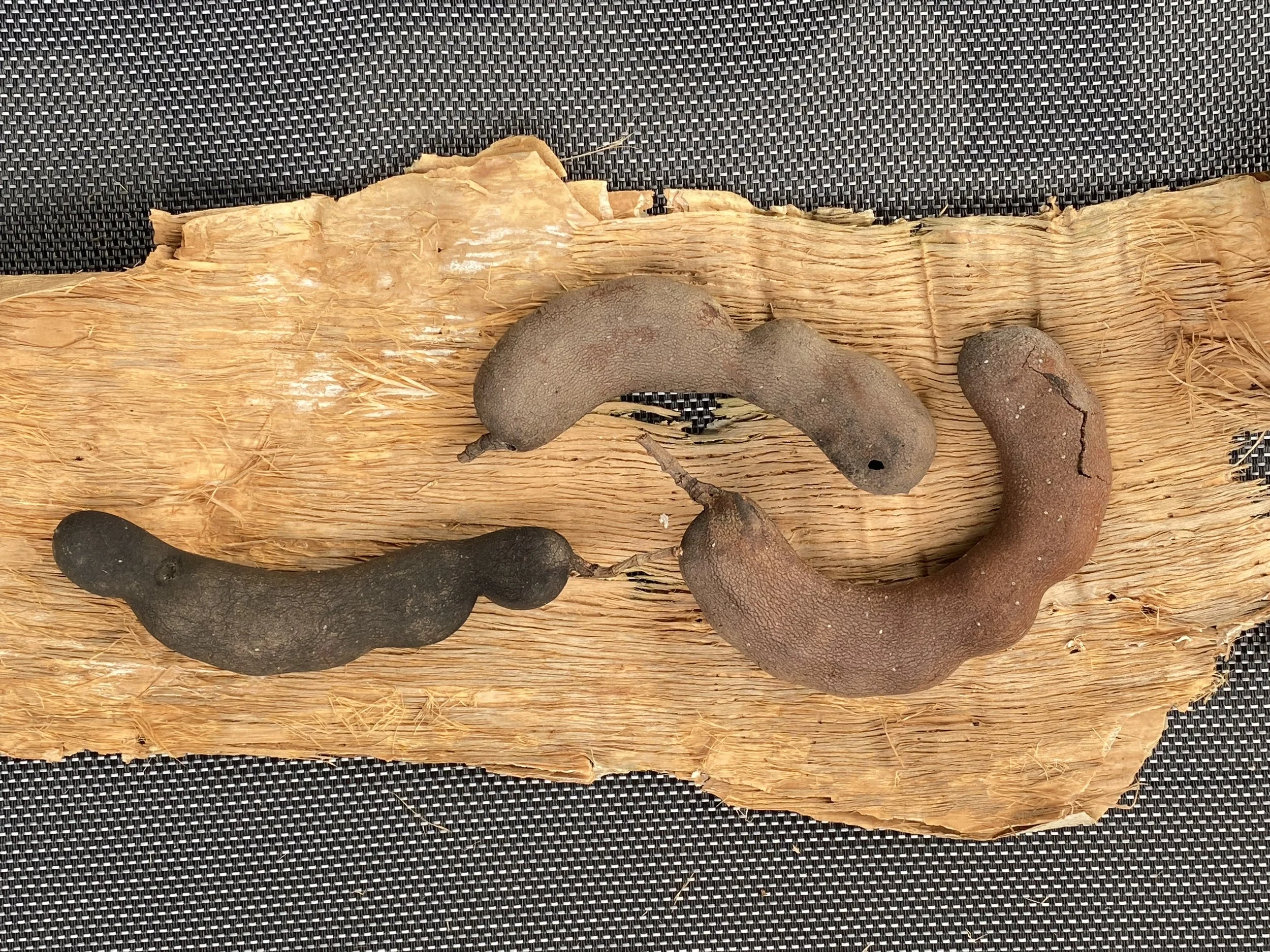
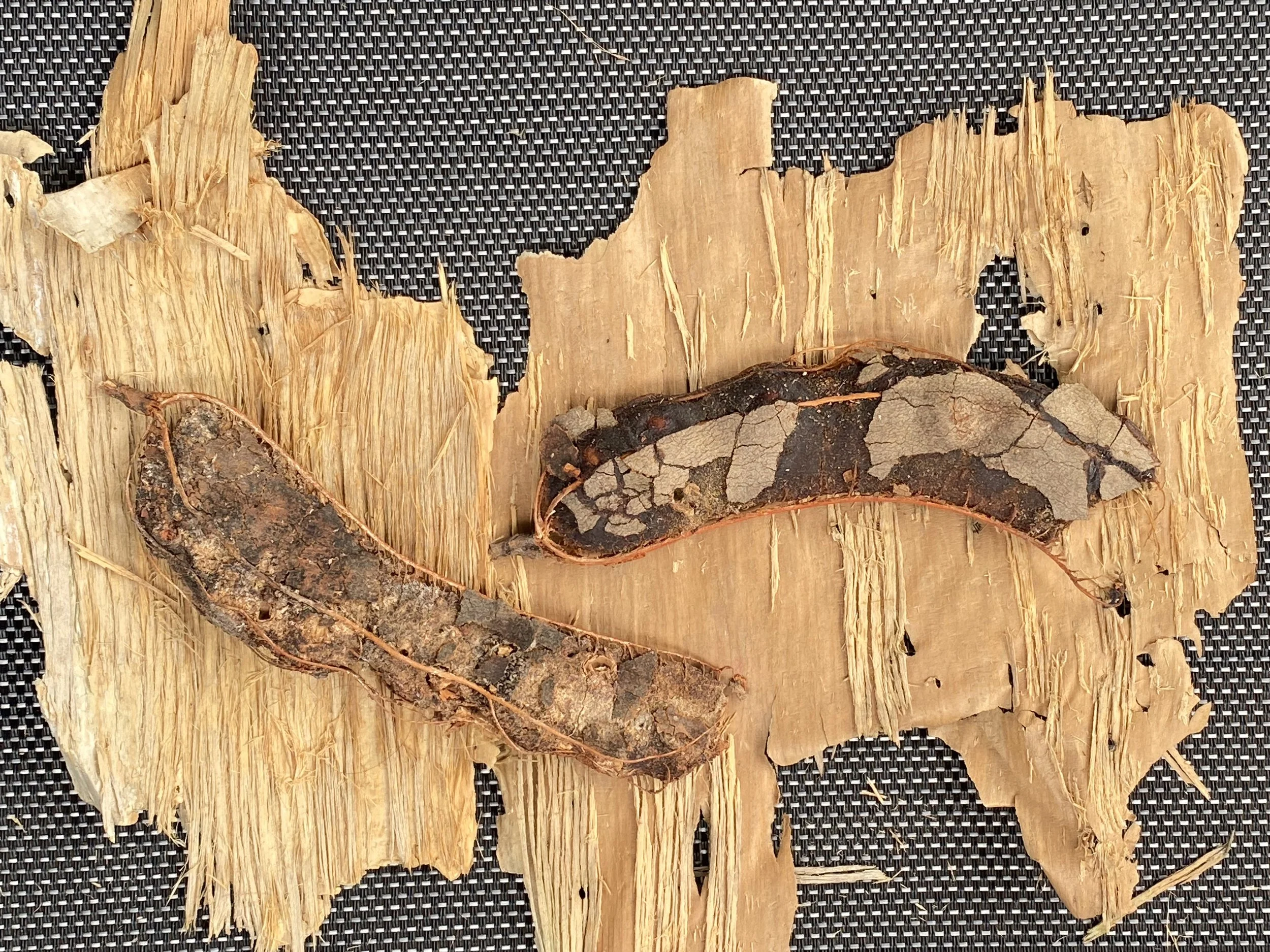
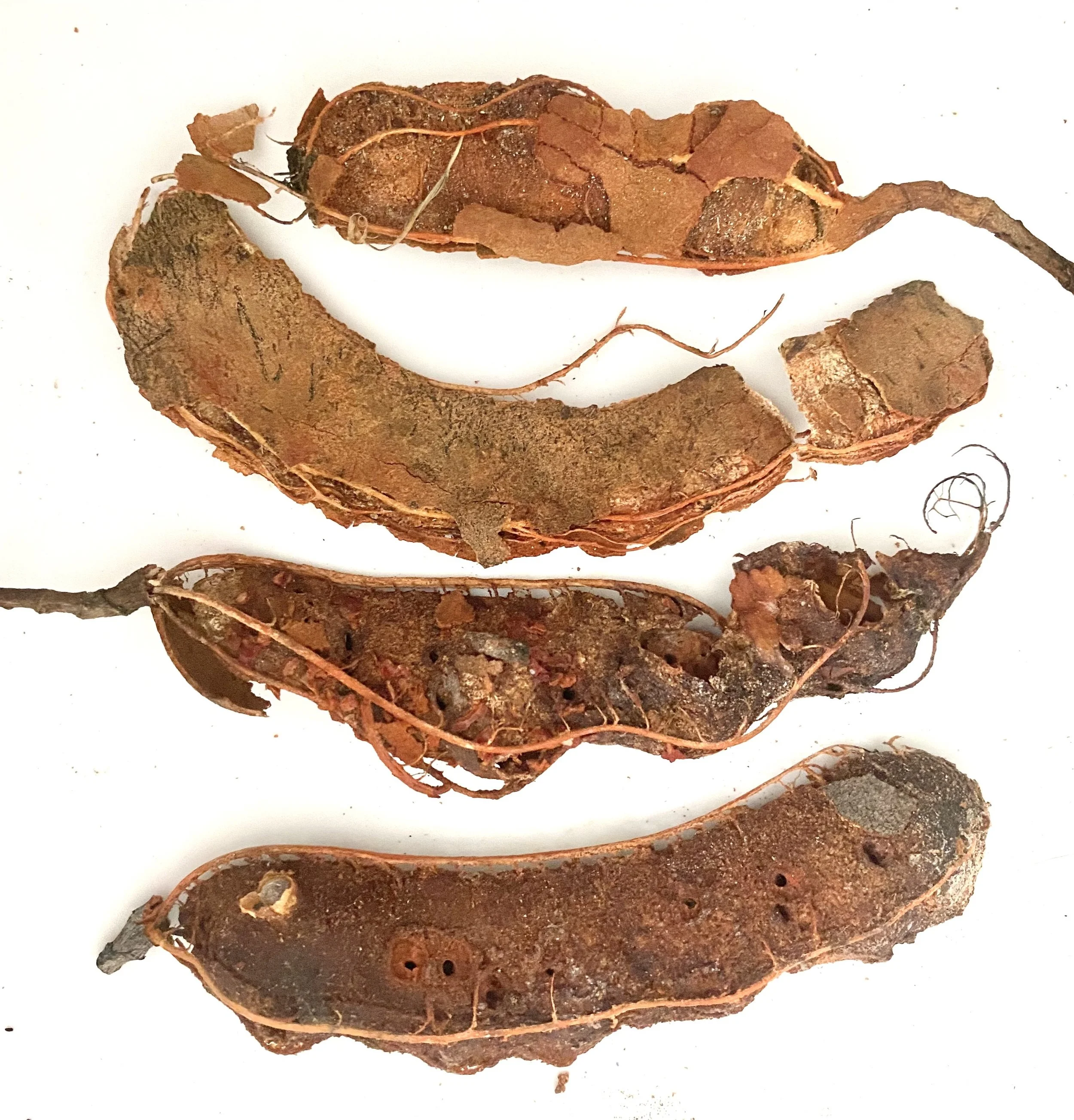
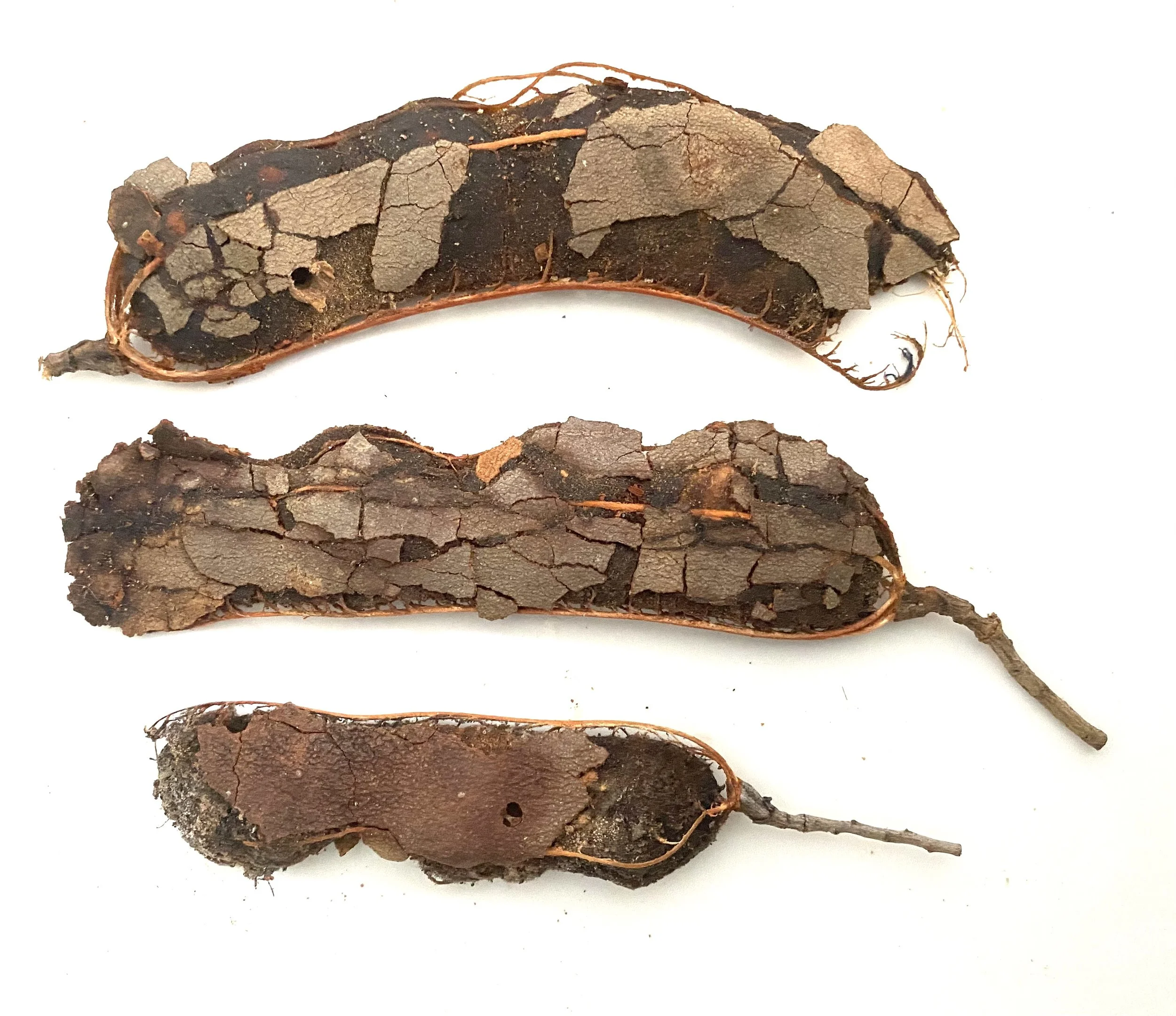
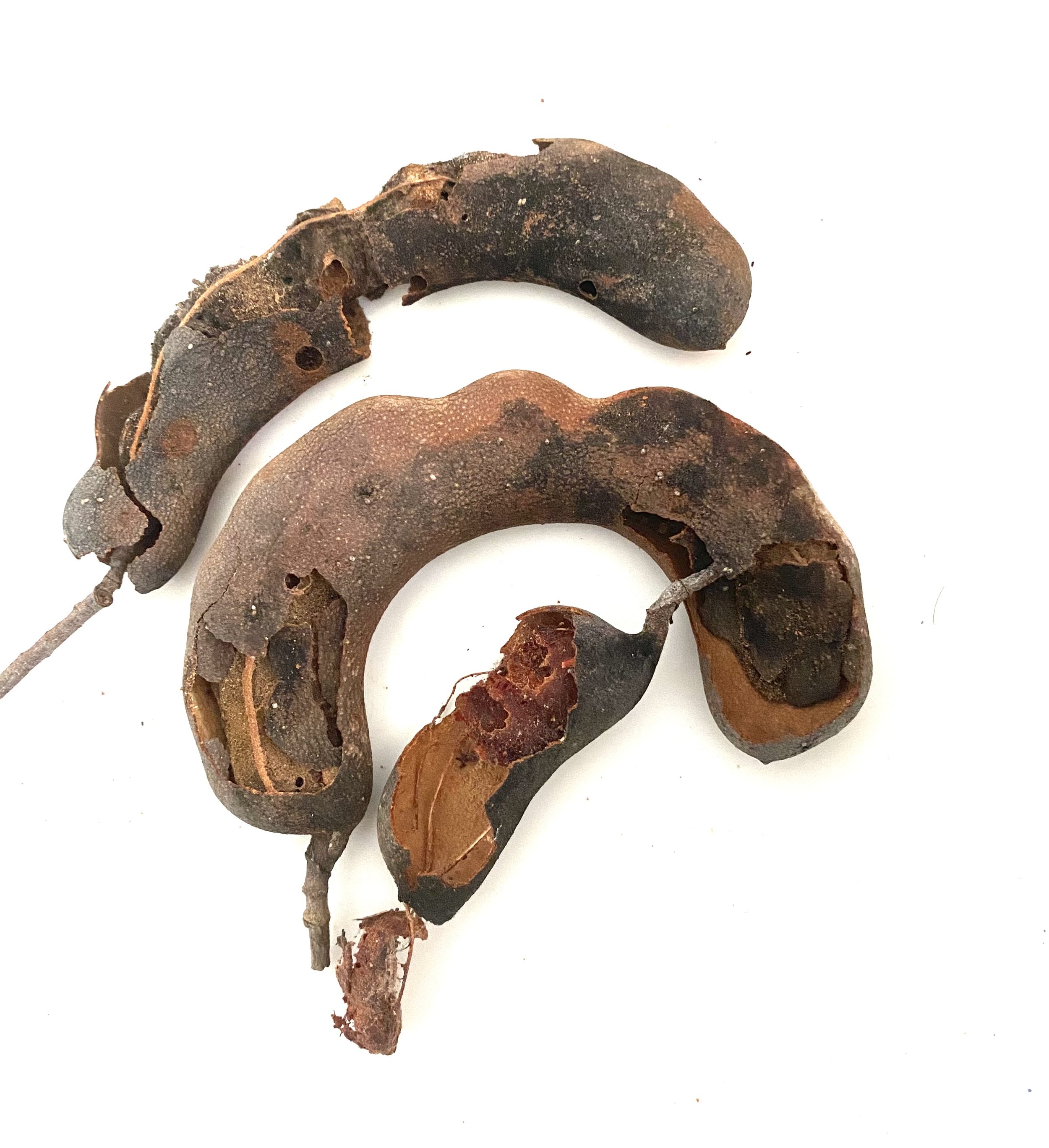
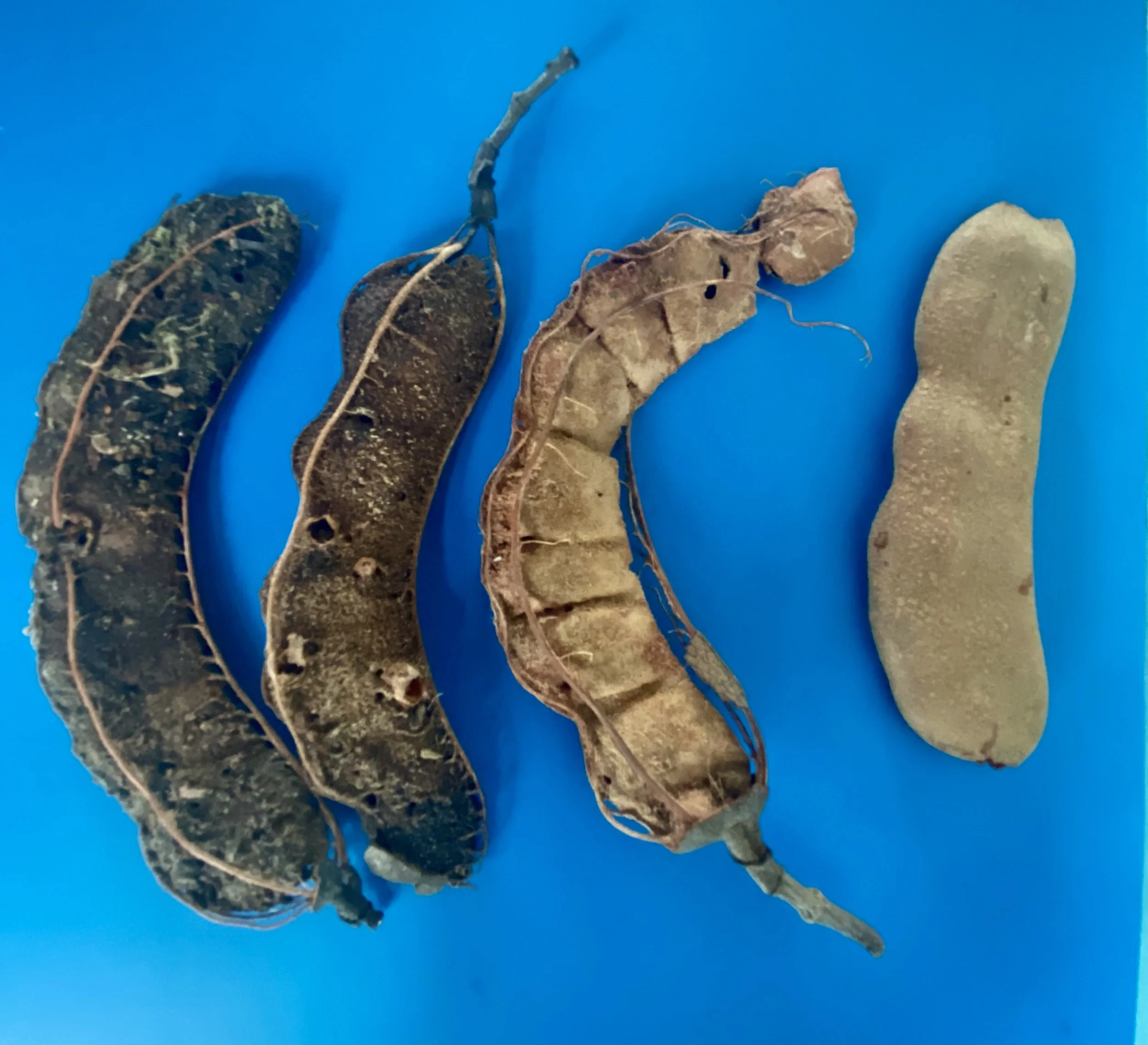
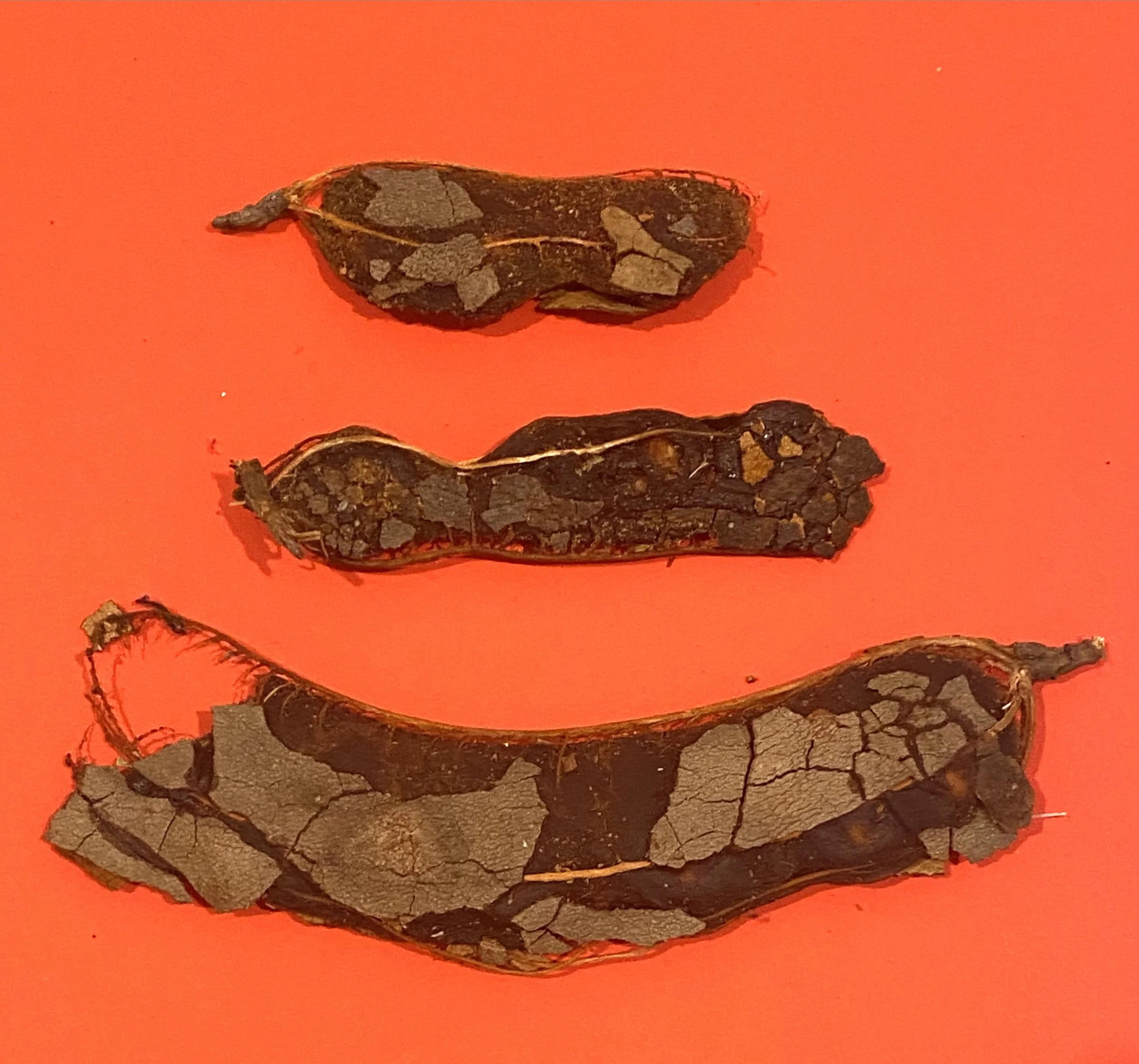
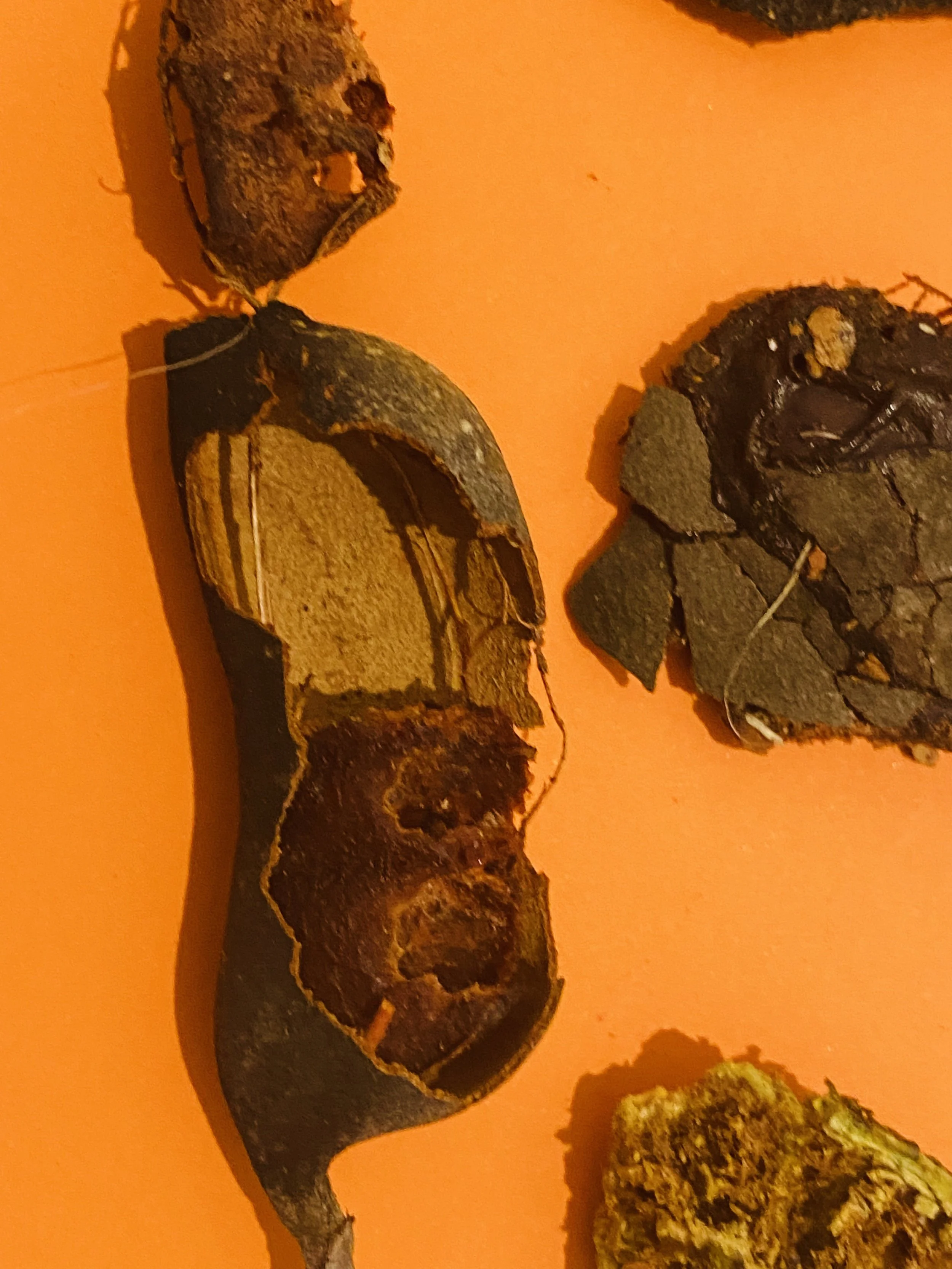
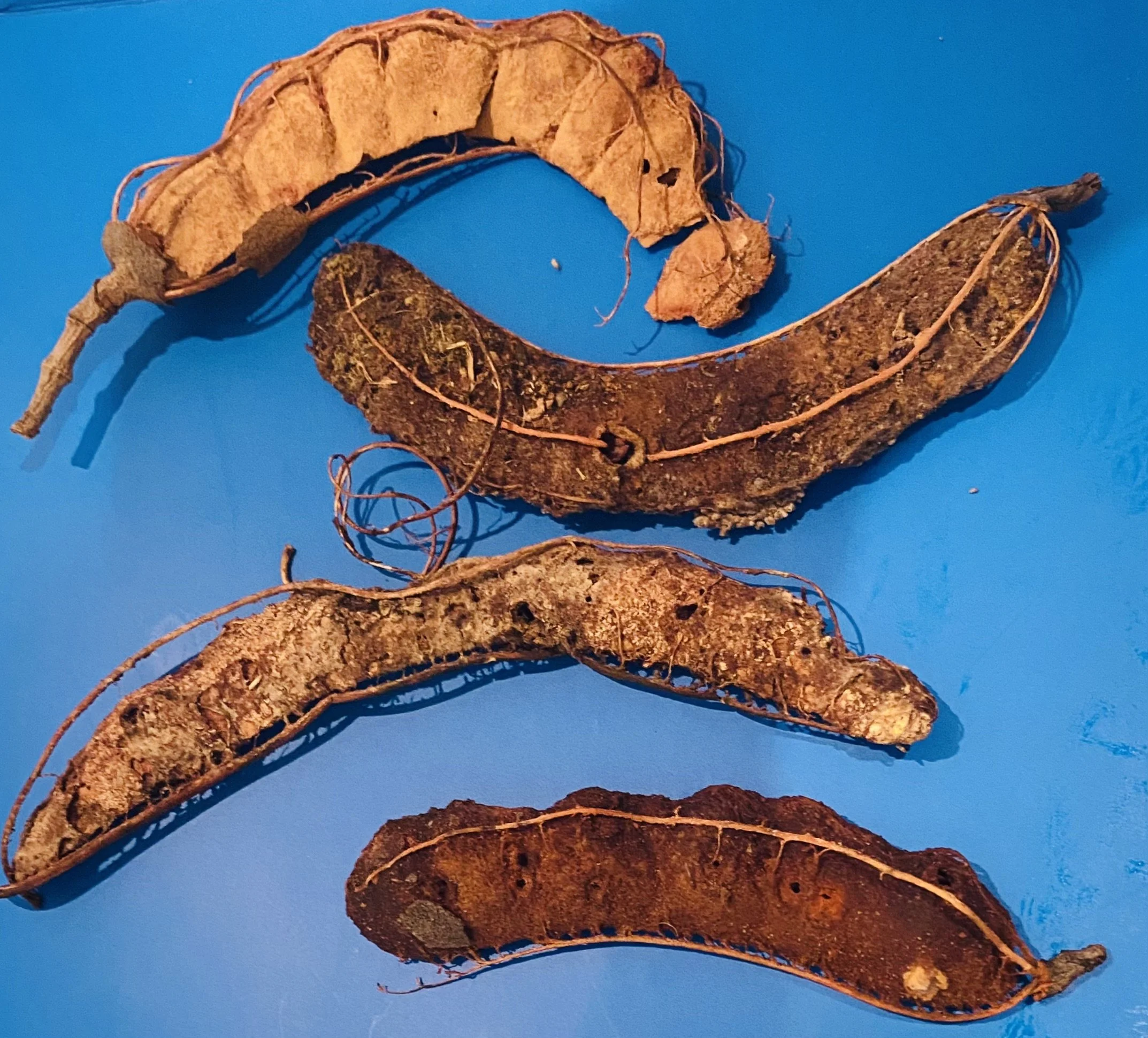
Brisbane is a city with spectacular lush tropical plants, trees, and parklands. In the suburb of Red Hill, a particular type of tree caught my interest, lining the entire street both sides and prolific with seed pods covering the leafy tree. It was the seed pods scattered across the footpath and beneath the trees everywhere, that peaked my interest. My artist eye was made aware as my feet crushed the organic matter with each footstep. The semi-decaying skeletal organic pods were like tiny developed organisms that magically and individually were like mini worlds. Armed with a basket and obsessively gathering what some would call debris, I thought treasure. Scattered everywhere, on the footpath and under the trees, nature working its magic. After retrieving the dried crumpled pods, ideas started to form and experimenting playfully with photography (iPhone)was an instant response . A series of images shot with varying experimental backdrops was the start. Coming from a strong artistic minimalist history I suddenly found my focus on the organic disarray of the crushed pods excited by their beauty, not a straight line in sight not even a square. Further the ongoing investigating of the TAMARIND tree its history, and culinary uses was a natural follow up.
As various opportunities arose to chat with small gatherings of families with children to the grandparents, sometimes entire families gathered on the footpath at the foot of pod laden trees.
All cooks/chefs are well aware of “tamarind”. For some it is a family ritual collecting Tamarind pods on the tree, they are removed by hand or shaken to fall on the ground. After collecting many baskets of the dry pods family members gather around the table and with many hands tamarind chunks emerge until the next harvest. After the desire to research the history of “tamarind” trees in Brisbane/Queensland . It emerged that the Tamarind trees were not that common.
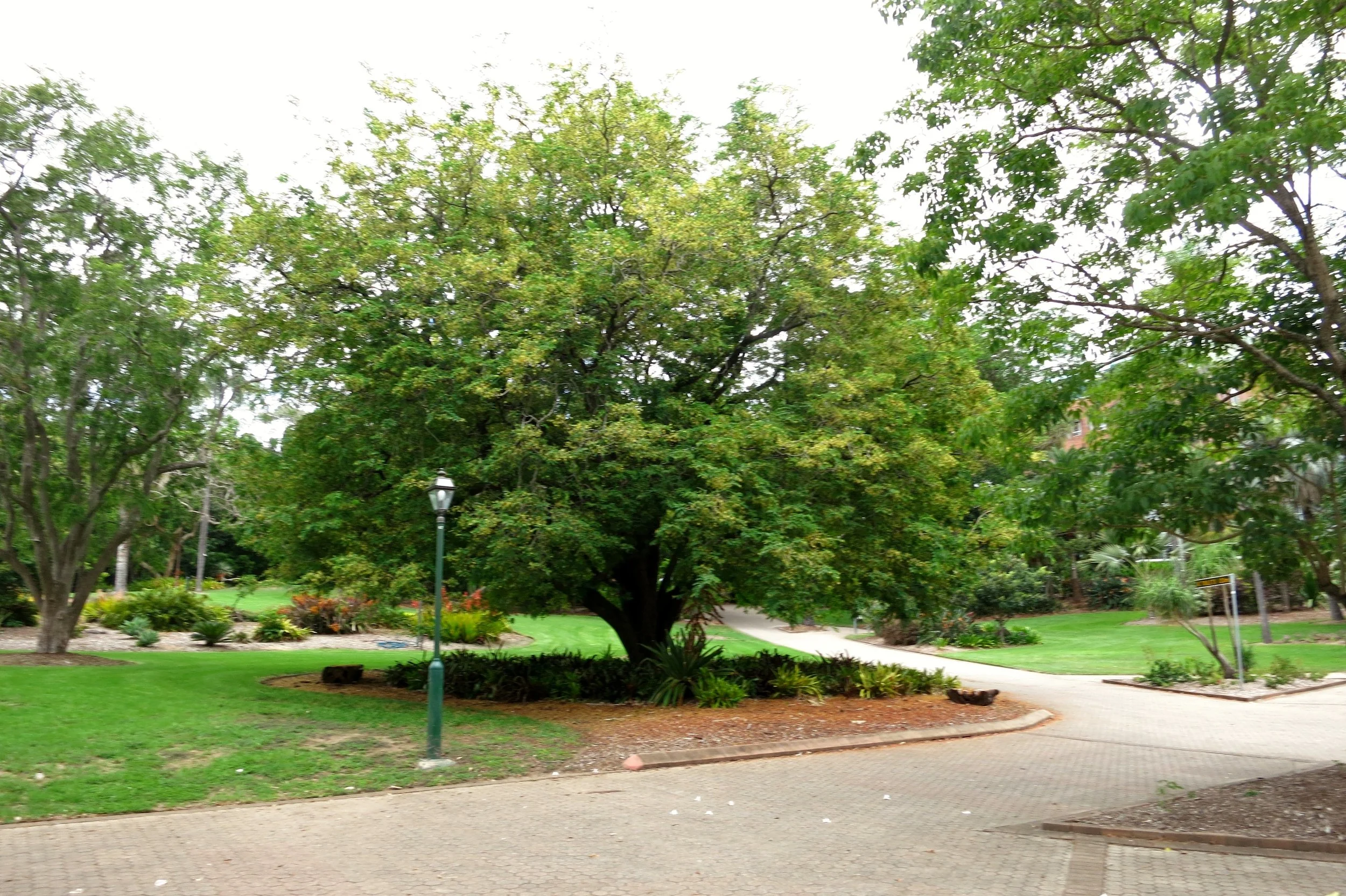
Historically some were planted in early days(1800s), following research I found there is one Tamarind tree in the Brisbane city Botanical Gardens thought to predate the formation of the Botanic Gardens, cultivated since 1828. It is a balanced tree in a prominent position and contributes significantly to the gardens landscape value. The Tamarind is indigenous to Tropical Africa but found wildly distributed throughout the tropical belt from Africa to South Asia, Northern Australia, and throughout Oceania, Southeast Asia , Taiwan and China.
https://trusttrees.org.au/tree/QLD/Brisbane/Brisbane_City_Botanic_Gardens_Alice_Street_15
Image below: Tree Botanical Gardens Brisbane
Wabi - sabi / TRADITIONAL JAPANESE PHILOSOPHY CENTRES ON THE ACCEPTANCE OF TRANSIENCE AND IMPERFECTION. FINDING BEAUTY IN THINGS THAT ARE IMPERFECT, IMPERMANENT AND IN COMPLETE. VALUING ORGANIC SHAPES, UNEVEN TEXTURES AND THE SLOW DECAY OF NATURE OVER RIGID ARTIFICIAL SYMMETRY.
Wabi-sabi nurtures all that is authentic by acknowledging three simple realities : nothing lasts, nothing is finished and nothing is perfect. In art books it is typically defined as ‘floored beauty’ Drawing attention to the ordinary things in life that might otherwise be overlooked. Seizing the fleeting nature of a mundane thing and find the beauty in it.
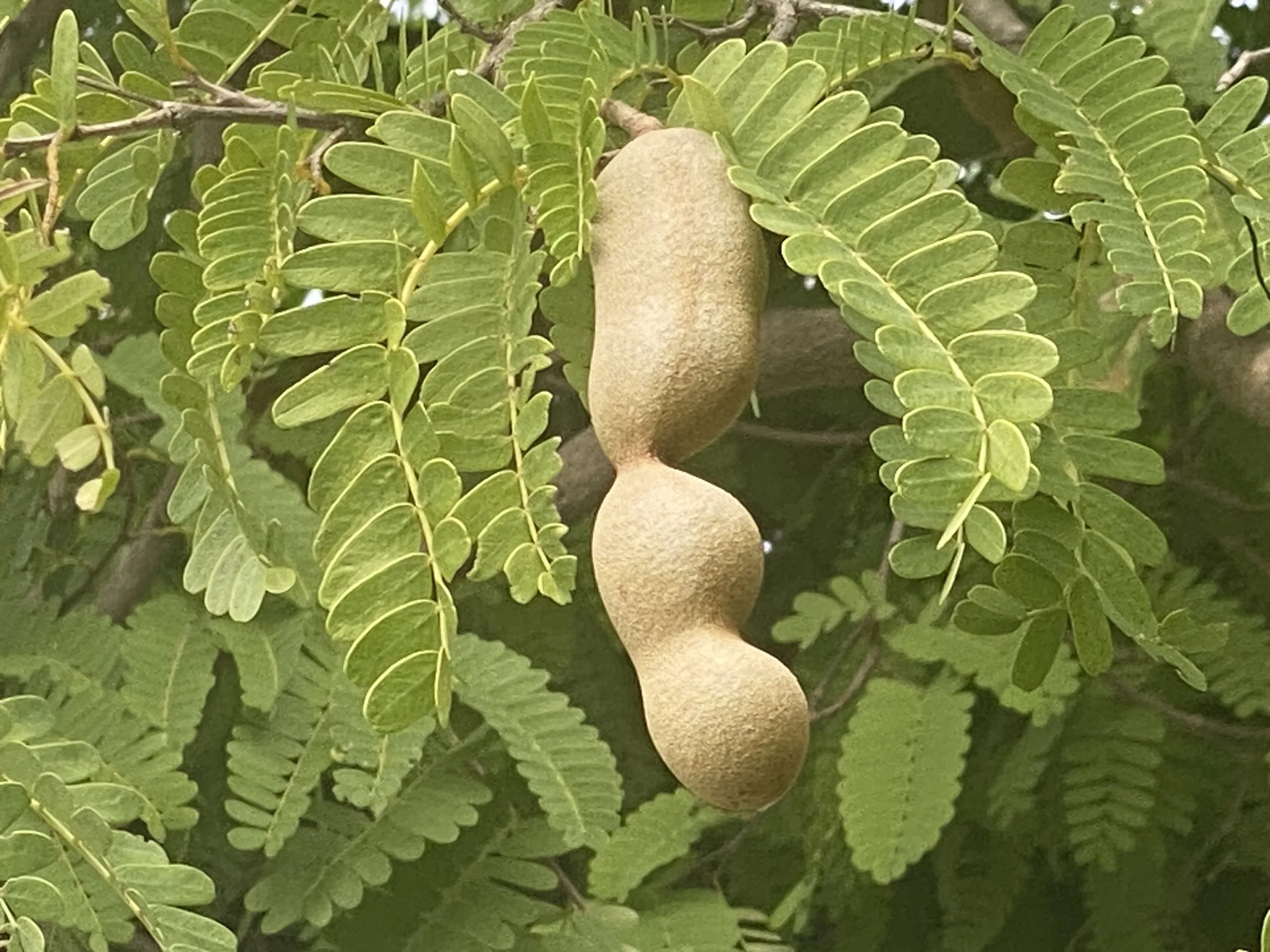
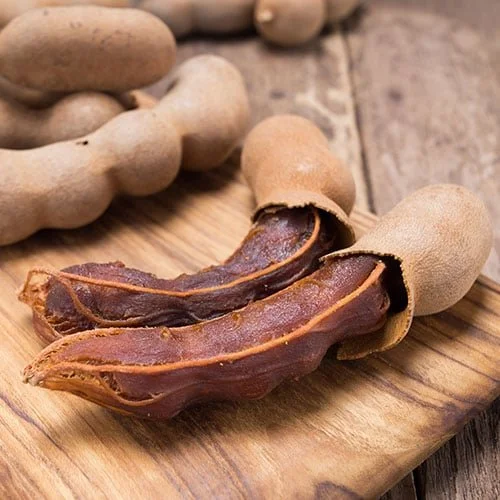
My eye is drawn to the crushed pods scattered under the trees creating an organic decaying wealth of intrigue, capturing my full attention. The tamarind a flavour powerhouse is known for its unique sweet sour flavour that enhances sauces, beverages, and savoury dishes and widely used in cuisines around the world. The pods are the natural fruit of the tamarind tree featuring the hard brown shells.
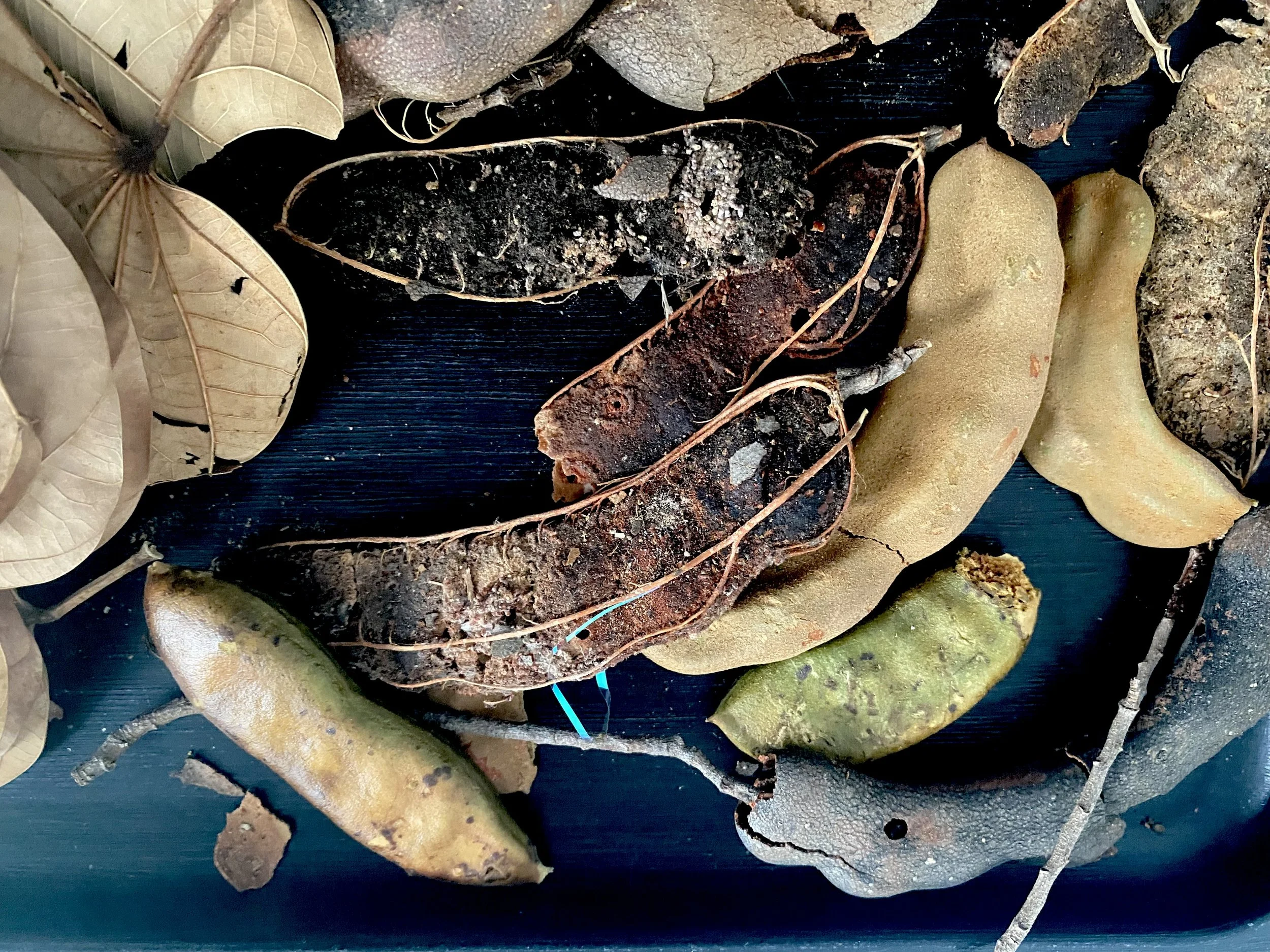
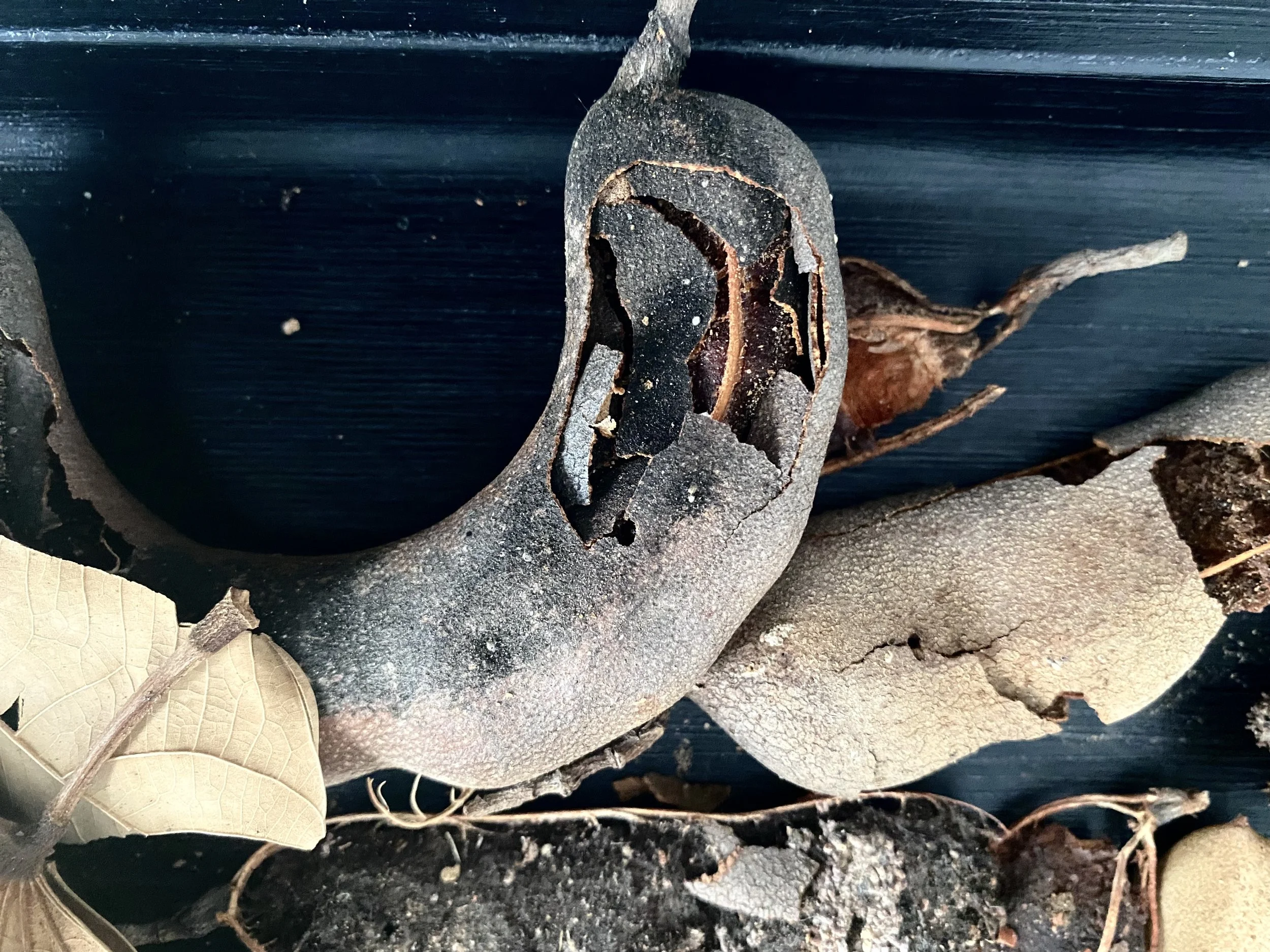
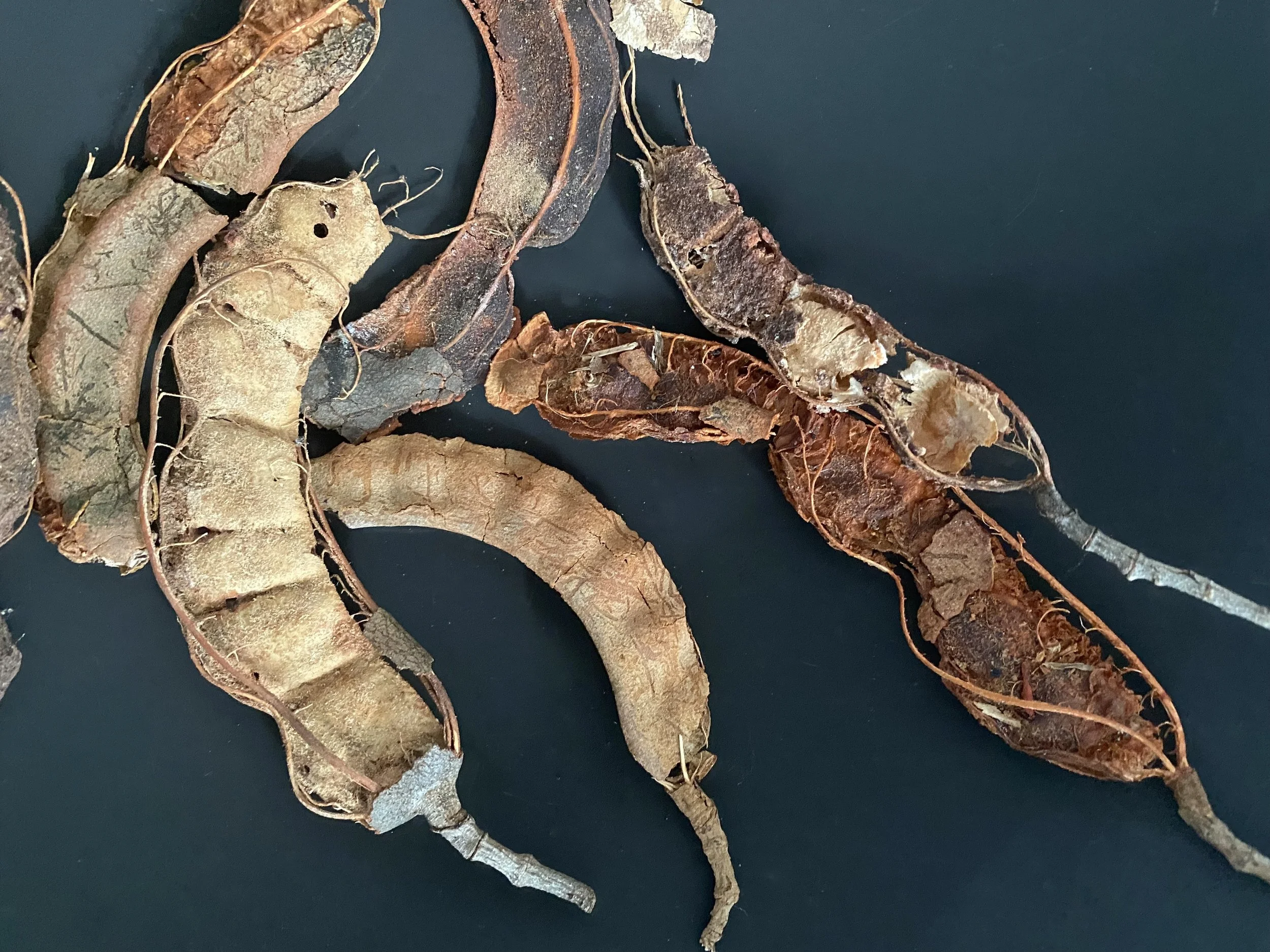
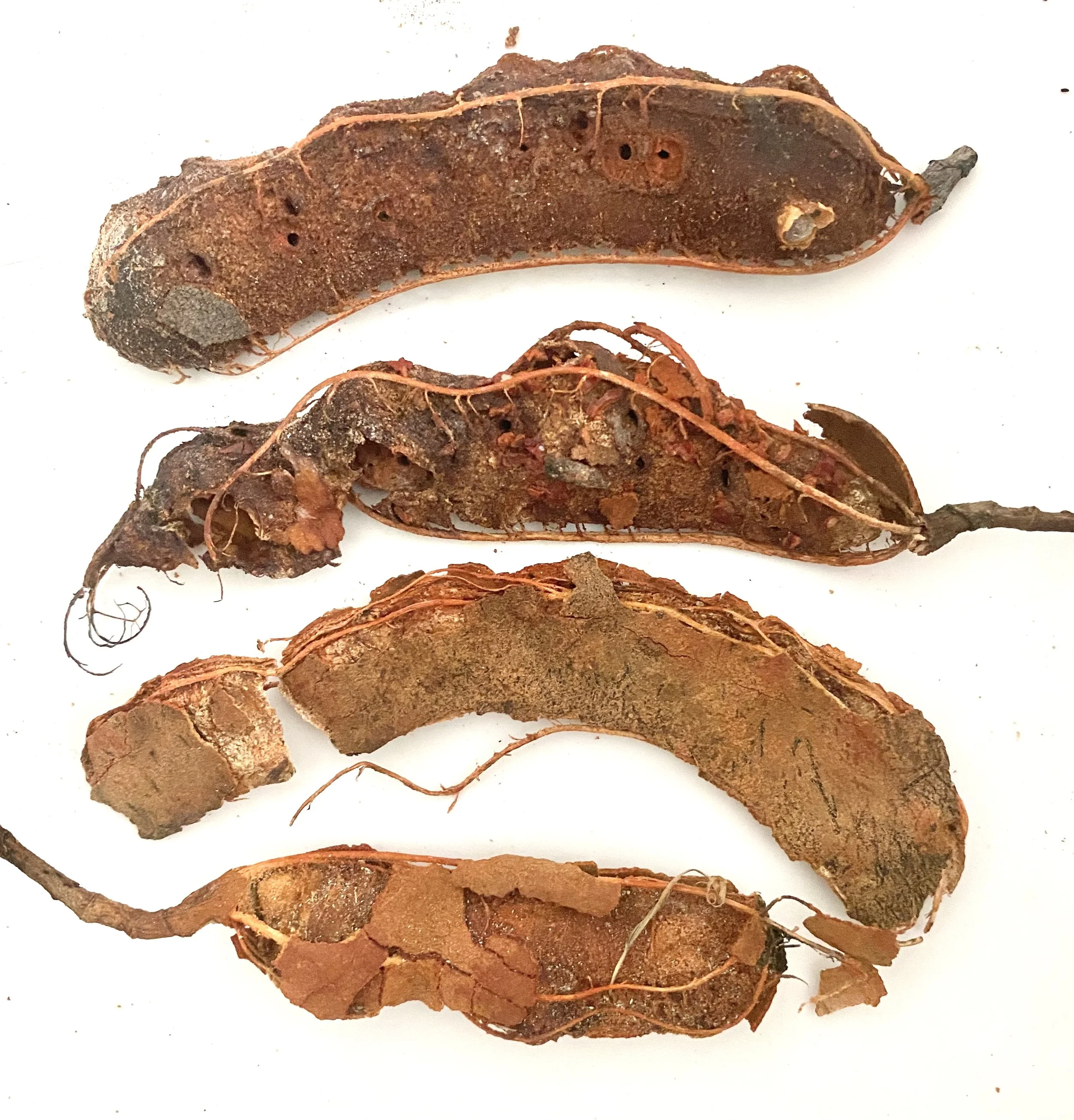
All images : © Marlene Sarroff
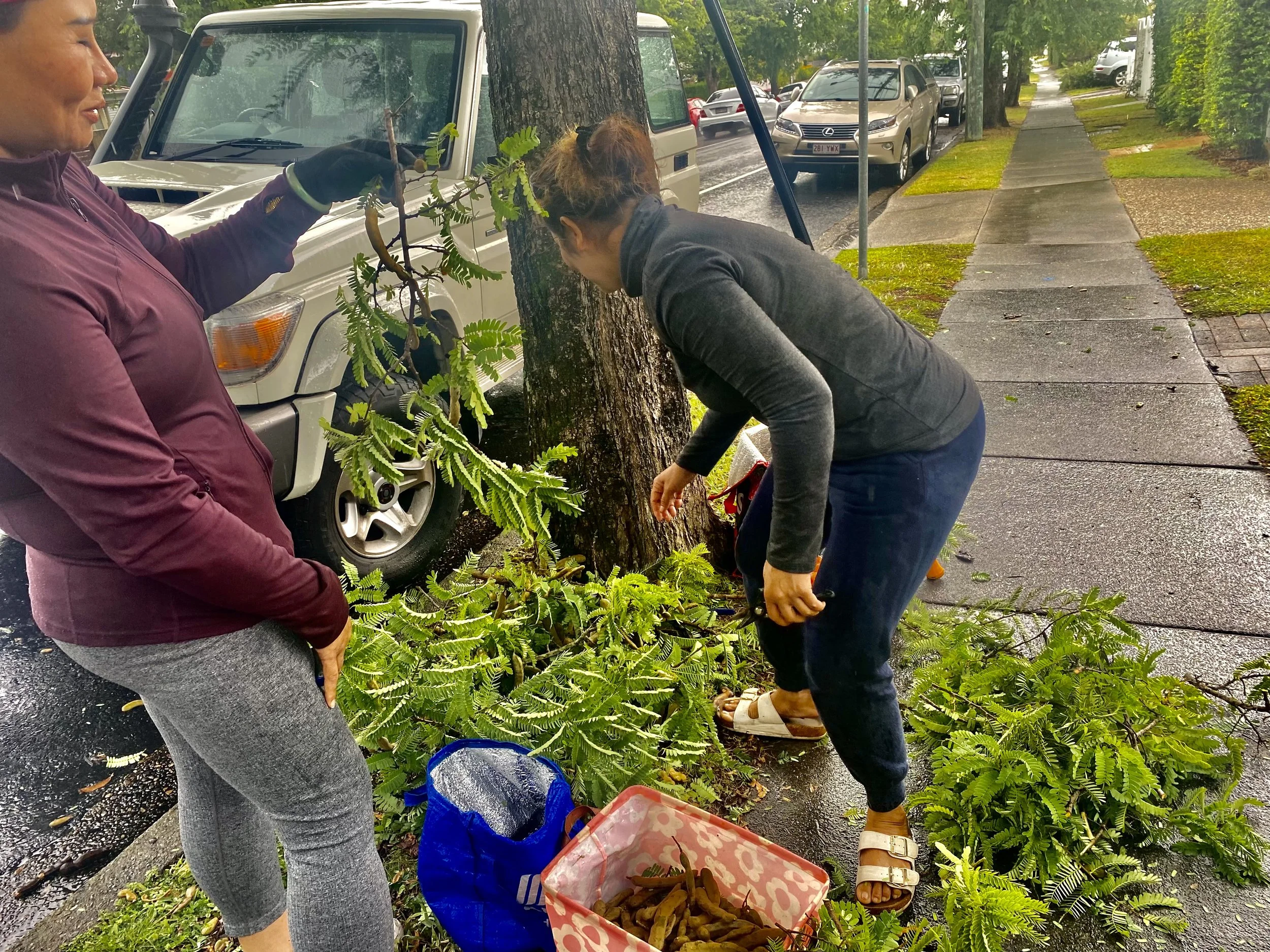
(images below) Occasionally you come across a family sitting on the ground gathering pods fallen from the tree. Also with a large pole to shake the branches and collect the pods into a basket. The families, mostly of Asian origin were expert Tamarind cooks and happy to share their knowledge on how to process and cook with it.
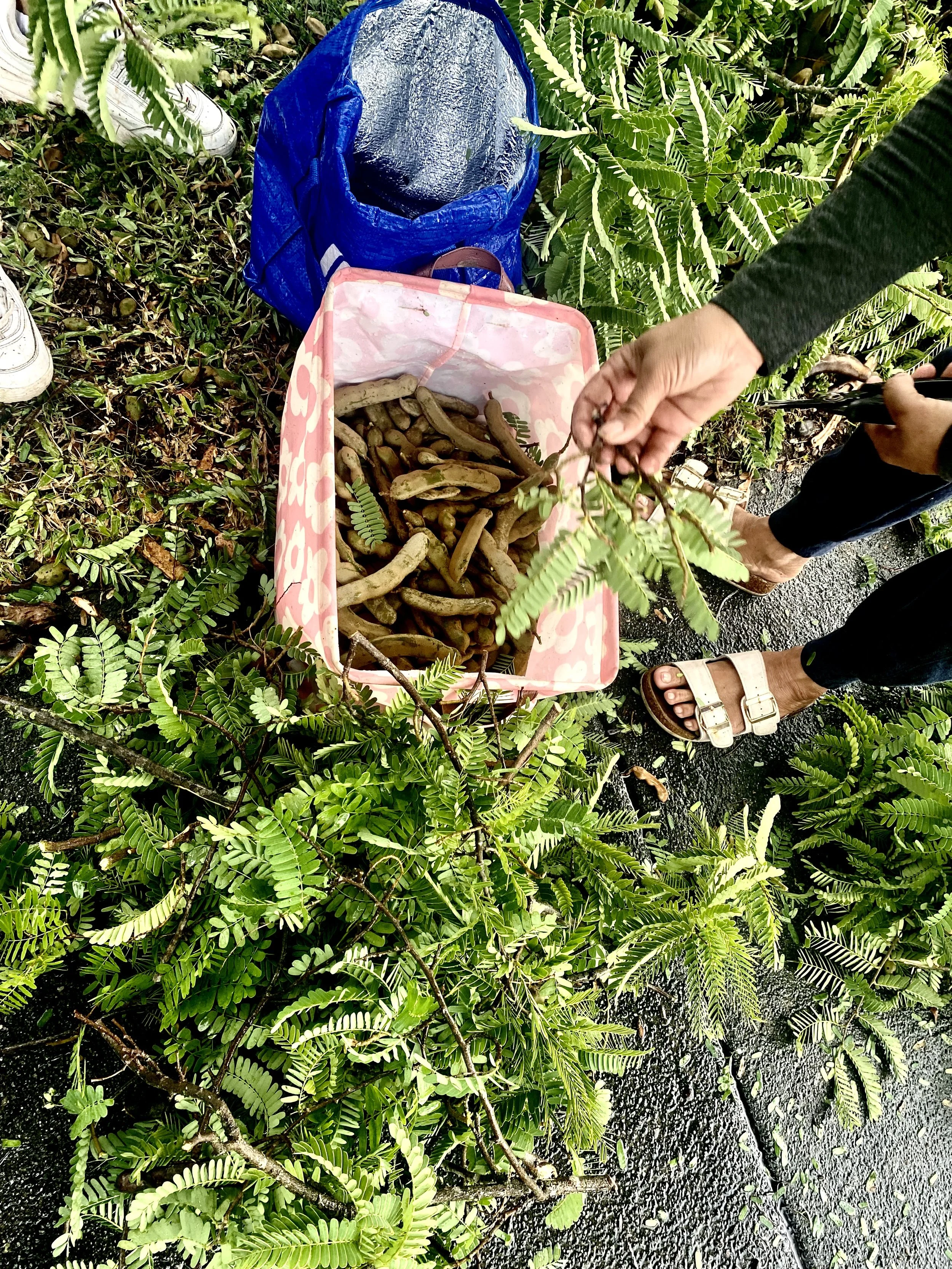
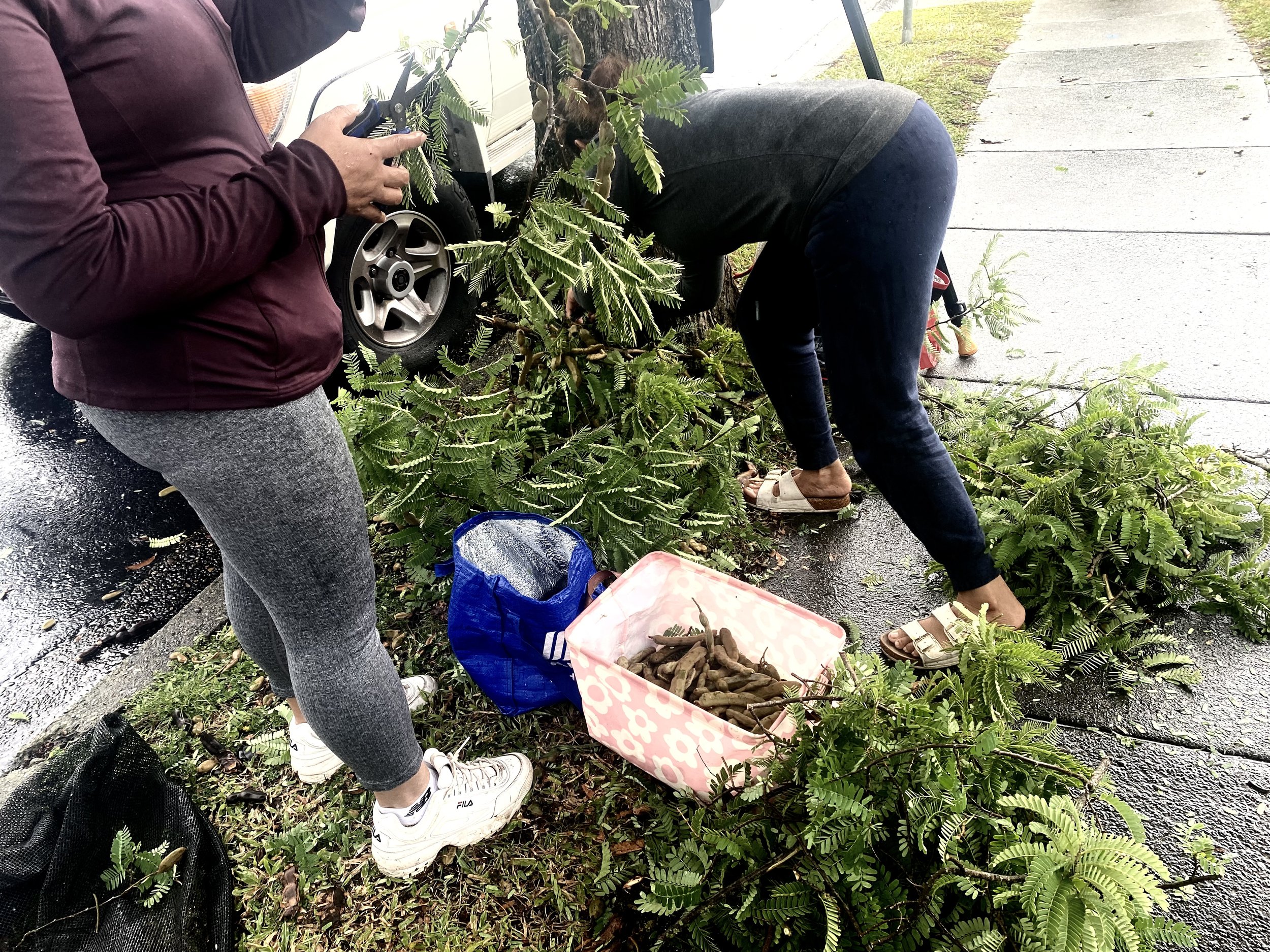
Tamarind trees
as the
‘accidentaL Heroes’
in – Indigenous
Australia’s
ancient contacts
The presence of tamarind trees (Tamarus indica) in the northern part of Australia are indicators of the ancient contacts between Australian First Nations peoples and trepangers from Makassar, South Sulawesi, Indonesia. For 300 years, as early as the mid 17th century, people from Makassar set sail to the northern coastal areas to catch and process the sea cucumbers known as trepang or beche de mer before shipping the commodity back to Makassar and selling them to Chinese merchants.
Tamarind trees grew around the Makassan trepangers’ camps on the coastal areas, and today, the trees have become a heritage botanical symbol for the Indigenous people in Australia's top end whenever they remember and retelling stories of the trepangers from Makassar. ‘Your ancestors planted the tamarind trees in here…’ that’s how Timmy Djawa Murrnmurrnga Burarrwanga, a leader of Yolngu community explained about our shared history through the trepang industry during my visit to Yirrkala, northeast Arnhemland, in December 2018.
If there was no urgency to plant the tamarind trees for food supply and there is no tradition of tree planting that existed in Sulawesi’s maritime culture, why have we found tamarind trees in Arnhem Land, the Kimberley and other parts of Australia’s northern coasts as well as in transit islands in East Indonesia? One might find the answer by simply imagining this daily activity: the trepangers cooked their foods and threw away the food waste, including the tamarind seeds, around their camp sites. Just like other organic waste, the food waste was easily washed away or buried on the shores. However, nature has provided enough ‘nutrition’ for the tamarind seeds to grow. So, the tamarind trees are the ‘accidental heroes’ in our shared history and culture.
Excerpt https://www.portsidereview.com/lily-yulianti-farid
Lily Yulianti Farid (RIP) is a published author with expertise in cultural links between Australia Indonesia.
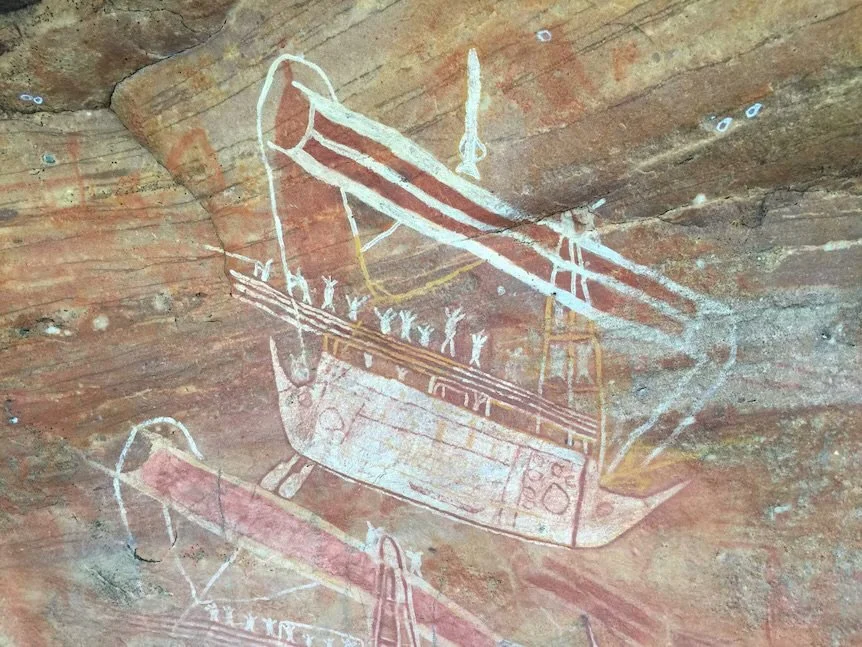
IMAGE: (left) A rock art site in the southeast Groote Eylandt depicting a Makassan prau. A traditional Indonesian wooden sailing vessel used by Makassan fisherman from Sulawai to travel to Northern Australia for centuries before European colonisation.
Credit Anindilyakwa Land Council
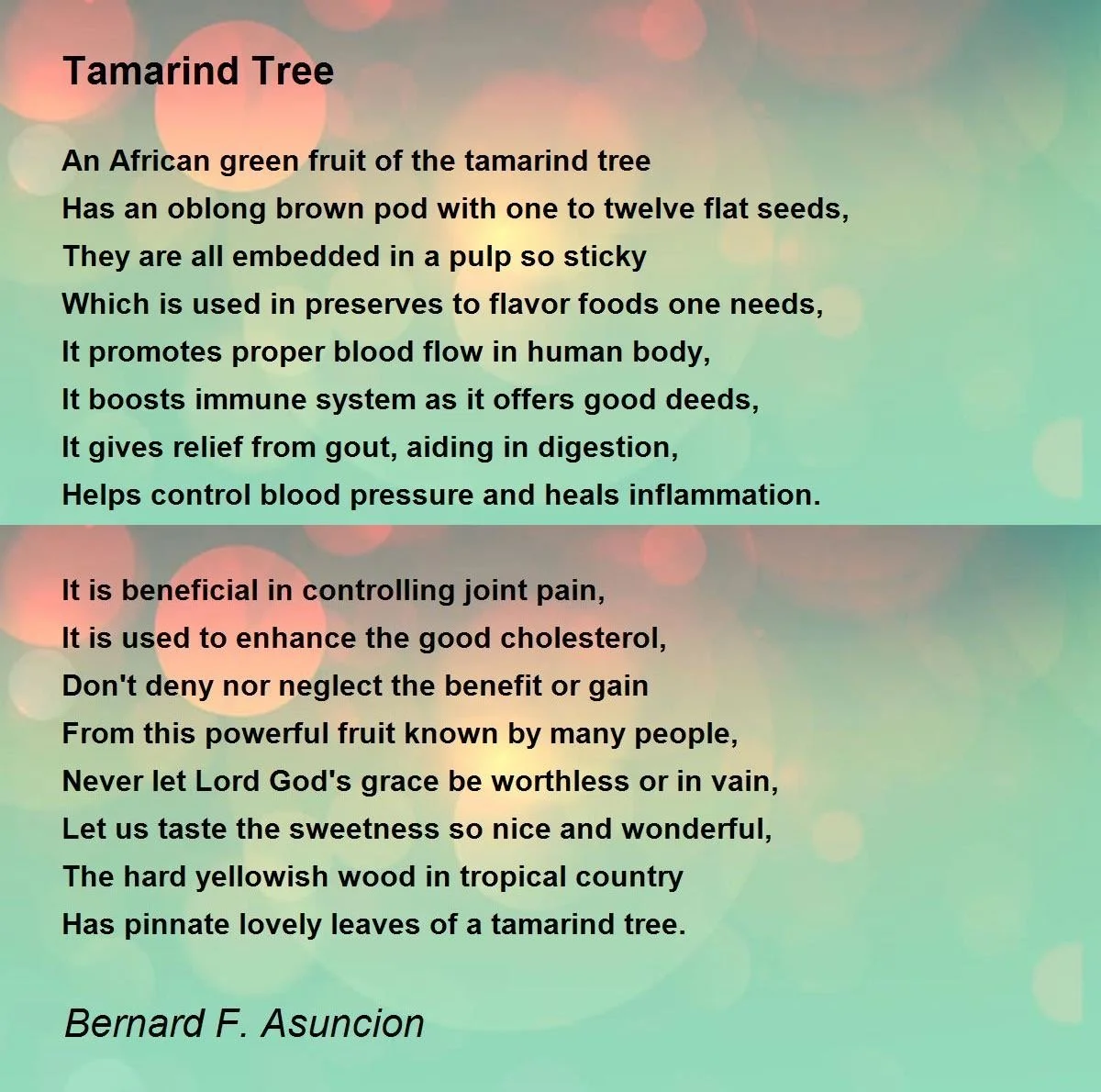
The Tamarind is a leguminous tree
A manual by a Byzantine physician Nickolas Myrepsos that the plant was used as early as the 13th Century for various medicinal purposes. Via; Serious Eats
All images : © Marlene Sarroff
Marlene Sarroff